Home
Download
Buy
Support

Heap Snapshot Views

After a heap snapshot is collected the information about the memory is presented in the following views:

Types/Resources

Types and resources

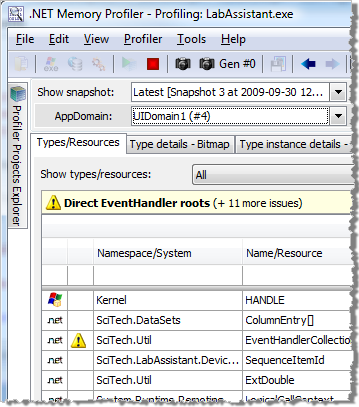
A list of all the types and resources in the profiled process. This list is collected during a heap snapshot and presents the number of instances and allocated bytes of each type, as well as the number of allocations performed per second.

If unmanaged resource tracking is enabled, then information about unmanaged resources is also presented in this view.
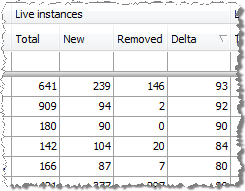
New and removed instances

The change of live instances between two snapshots is also shown. This information can be used to find memory leaks.
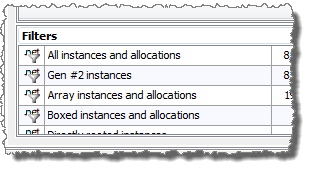
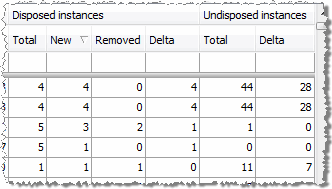
Disposed and undisposed instances

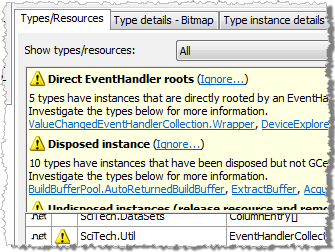
By selecting to show dispose information, information about disposed and undisposed instances is presented. Undisposed instance are disposable instances that have been garbage collected without being properly disposed.
Type/Resource Details

The details of a type or resource can be viewed by double-clicking on the entry in the Types/Resources list.

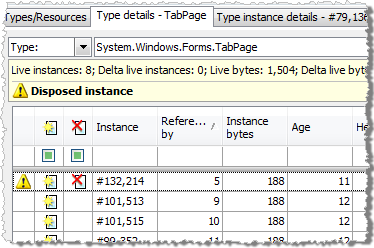
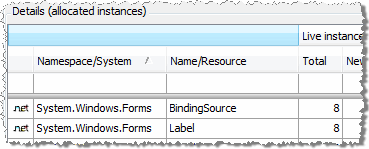
The details shown include information about all the instances of a type or resource...

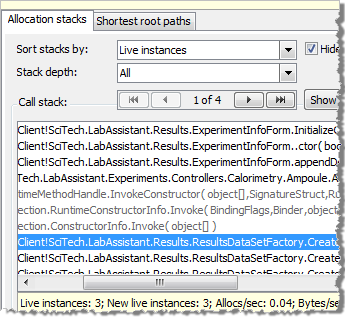
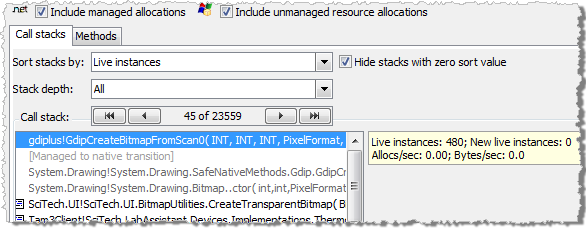
...as well as the call stack of all allocations of the type or resource. Each stack contains information about the number of allocations, number of allocated bytes and the number of live instances. The stack information can be used together with the Allocs/sec and Bytes/sec columns in the Types/Resources view to discover excessive allocations, and to pinpoint where the allocations occur.

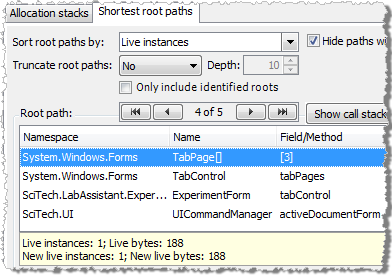
The shortest root paths of all instances of a managed type are also presented.

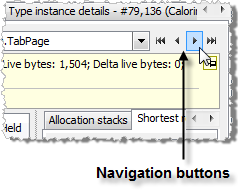
New! The navigation buttons can be used to easily browse through a selected set of types or resources.

Instance Details

The details of a specific instance can be viewed by double-clicking on an instance entry.

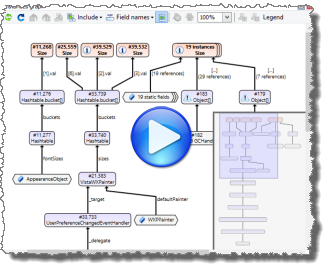
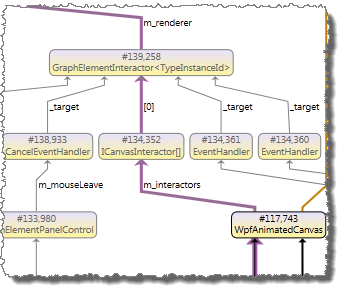
The details of a managed type instance include base information such as size, age and the state of the instance (New, Disposed etc.). Additionally, information about all references to and from the selected instance, the allocation stack of the instance and, most important, all paths to all roots of the instance are also included.

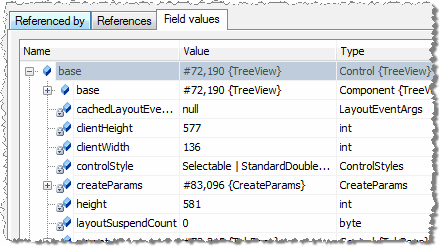
Instance field values

If instance data has been collected, the values of the fields will also be displayed.

New! The instance fields can be presented in a style mimicing the watch windows in Visual Studio, or they can be presented in a flat style; in the order they are defined.

If the root is a static field, local variable or method argument then the name of that root will be presented, otherwise the root is simply presented as <root>.

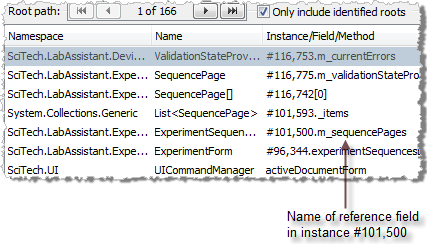
All root paths are listed starting with the shortest path.

The root paths are extremely useful to find out why an instance is not garbage collected.

New! When a a reference to an instance is presented, both the instance number and the name of the referring field is included. This makes is easier to find out how an instance is referenced and why it has not been garbage collected.


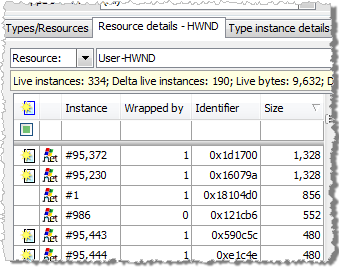
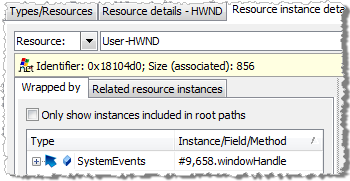
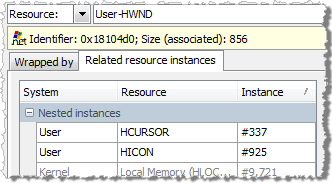
The details of an unmanaged resource instances include base information such as the identifier, size and the state of the instance. Additionally, information about managed type instances that wrap the resource instance is displayed, as well as the allocation stack of the instance.

Related resource instances

If several resource instances are created during the same function call, they will be presented as related resource instances.

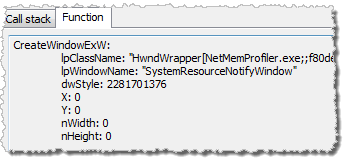
In addition to the call stack of the instance creation, the function arguments provided to the creation function is also presented.

Navigation buttons

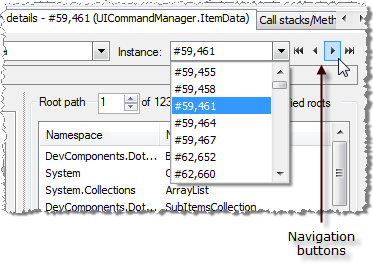
New! The navigation buttons can be used to easily browse through a selected set of instances.

Call Stacks/Methods

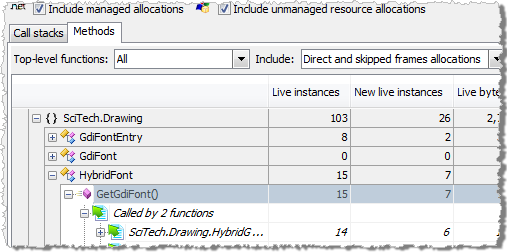
Information about all allocation call stacks and methods can be viewed using the Call stacks/methods page. It presents information about all saved call stacks (or methods). The allocation stacks can be useful to find code that perform excessive allocations. It can also be used to locate call stacks (or methods) that are responsible for creating a large number of live, disposed or undisposed instances.


Details about the allocations performed by a call stack or method are also presented.

Native Memory

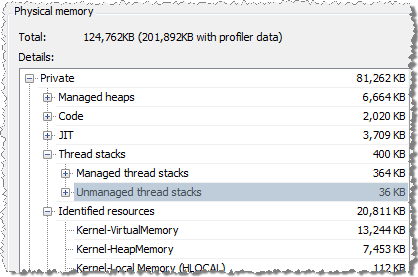
The Native Memory Page presents information about the native memory of a process. Native memory is the memory managed by the operating system, rather than the Common Language Runtime.

New! .NET Memory Profiler also makes use of the information collected by the unmanaged resources tracker (if enabled) when presenting native memory, allowing more detailed information to be identified.

.NET Memory Profiler is developed by SciTech Software AB
© Copyright 2002-2008. SciTech Software AB. All right reserved.

If you have any comments or questions on the profiler, please write to memprofiler@scitech.se.